


A mascot can be ridiculous on purpose and still be serious business. The best characters fill dead time in an arena, give young fans an immediate connection to a team, create sponsor inventory, travel to community events and generate social content without asking a star player to be available.
That is the lens behind this list of the best sports team mascots. It is an SPMA Hub editorial selection, not an official league ranking. Longevity matters, but so do personality, local identity, performance range and the simple question of whether the character feels inseparable from the team.
Some choices are obvious. Others are here because they show a particularly smart piece of sports branding.
1. Phillie Phanatic, Philadelphia Phillies
The Phillie Phanatic is the standard against which many North American mascots are measured. The green, long-snouted creature does not attempt to look like a literal representation of Philadelphia or a baseball player. That freedom is part of the appeal.
The Phanatic’s personality comes through physical comedy, exaggerated reactions and a willingness to interact with opposing players and fans. The character is recognizable even when separated from the Phillies logo, which is the mark of unusually strong mascot branding.
2. Gritty, Philadelphia Flyers
Gritty became a cultural phenomenon almost immediately after the Flyers introduced the orange creature in 2018. The design is intentionally strange, with wild eyes, oversized movement and a personality that fits Philadelphia’s reputation for passionate sports fandom.
What sets Gritty apart is digital voice. The mascot became as effective online as in the arena, showing that a modern character can function as a social-media brand rather than only game-night entertainment.
3. Benny the Bull, Chicago Bulls
Benny is one of basketball’s most recognizable mascots. A bull is an obvious match for the team name, but the character’s longevity comes from performance: dancing, stunts, crowd interaction and a high-energy personality.
NBA arenas have frequent timeouts, which gives mascots opportunities to become part of the entertainment rhythm. Benny has turned those short windows into a recognizable part of the Bulls experience.
4. The Raptor, Toronto Raptors
The Raptor takes a straightforward team concept and turns it into a flexible entertainment character. The red dinosaur can be playful with children, perform physical stunts and fit naturally into the prehistoric branding established when the franchise entered the NBA in the 1990s.
For Toronto, the mascot also benefits from being attached to Canada’s only NBA team. Appearances can therefore support a national fan-development strategy rather than only a local one.
5. Youppi!, Montreal Canadiens
Youppi! has one of the most unusual mascot careers in professional sport. The orange character originally represented the Montreal Expos in Major League Baseball, then moved to the Canadiens after the Expos relocated.
That cross-sport history makes Youppi! part of Montreal sports culture, not just one franchise. The Canadiens continue to build events around the mascot, including mascot parties featuring characters from other teams.
6. Orbit, Houston Astros
Orbit is a fuzzy green alien whose identity connects naturally to Houston’s association with space. That is a strong example of local branding: the mascot is not a literal Astro, but the character instantly reinforces the city’s space identity.
Orbit also benefits from a design that works for visual comedy. Large eyes, a round body and expressive movement make the character easy to recognize from across a stadium or in a short social clip.
7. Mr. Met, New York Mets
Mr. Met’s giant baseball head is about as direct as mascot design gets. The simplicity is the strength. A fan who knows almost nothing about the Mets can still understand the character immediately.
Mr. Met also has decades of history, which gives the mascot nostalgia value across generations. Long-running characters can become part of family fandom because parents and children recognize the same figure.
8. Bernie Brewer, Milwaukee Brewers
Bernie Brewer is inseparable from one of baseball’s most recognizable mascot traditions: the slide at American Family Field. The character connects directly to Milwaukee’s brewing identity while also providing a repeatable celebration after Brewers home runs.
That repeatability is valuable. Great mascots often have a signature action that fans anticipate rather than a collection of unrelated appearances.
9. Wally the Green Monster, Boston Red Sox
Wally turns one of baseball’s most famous pieces of architecture into a character. The Green Monster is the left-field wall at Fenway Park, so a green mascot named Wally gives the stadium itself a playful identity.
It is a smart piece of brand extension because the character only makes full sense in Boston. A generic animal could belong anywhere. Wally belongs specifically to Fenway.
10. Dinger, Colorado Rockies
Dinger is a purple dinosaur whose origin story is connected to dinosaur fossils found during construction around Coors Field. The result links the Rockies mascot to both the team’s purple visual identity and a piece of Colorado-area history.
Like The Raptor, Dinger benefits from dinosaurs being inherently appealing to younger fans. That matters because mascot programs are often one of the easiest entry points for children who do not yet understand the sport itself.
11. Iceburgh, Pittsburgh Penguins
Iceburgh is a natural visual translation of the Penguins name. The character’s black-and-gold look also connects neatly with Pittsburgh’s broader sports colors.
NHL mascots are particularly valuable during intermissions and stoppages because hockey arenas need entertainment that can fill breaks without changing the identity of the event. Iceburgh has become a familiar piece of that environment.
12. Gnash, Nashville Predators
Gnash is a sabre-toothed cat linked to the Predators name and to fossil history in the Nashville area. The mascot gives an abstract team name a visible character that is both family-friendly and still capable of looking suitably fierce.
That balance matters. A mascot has to work in a children’s hospital appearance and in a loud playoff arena. Characters that can shift between those settings are especially valuable.
13. ThunderBug, Tampa Bay Lightning
ThunderBug transforms the Lightning’s weather-based identity into an actual creature. Instead of trying to personify a lightning bolt, the team uses an insect-like character with a name that preserves the “thunder” connection.
The result is distinctive enough to stand on its own while still clearly belonging to the Lightning.
14. KC Wolf, Kansas City Chiefs
KC Wolf is a large, energetic wolf character that has represented the Chiefs since 1989. The character has become a major part of community appearances and game-day entertainment.
NFL mascots operate in a different rhythm than NBA or NHL characters because football has fewer home games and longer breaks between them. That makes off-field community programming especially important to maintaining visibility throughout the year.
15. Sourdough Sam, San Francisco 49ers
Sourdough Sam is built around San Francisco’s Gold Rush history and the 49ers name. The miner character gives the franchise a direct link to the historical reference behind its identity.
This is classic mascot storytelling: the character helps explain the team name rather than merely repeating it.
16. Viktor the Viking, Minnesota Vikings
Viktor is a straightforward extension of the Vikings brand, but strong execution keeps the character effective. The costume, helmet and personality translate the team’s historical theme into a family-friendly arena and community presence.
Human-like mascots can be harder to distinguish than creatures, so the success depends heavily on performance and recognizable visual details.
17. Freddie Falcon, Atlanta Falcons
Freddie Falcon gives Atlanta’s NFL team a direct bird character that can perform in settings where the more serious team logo would not work. The mascot can exaggerate the shape and movement of a falcon while remaining approachable to children.
That gap between official logo and mascot personality is useful. A team can protect a powerful primary brand while letting the mascot be silly.
18. Toro, Houston Texans
Toro is a blue bull character whose name and design fit Texas cattle imagery without copying the Texans’ primary bull-head logo exactly.
The mascot supports a regional identity and works especially well for youth programming. That is a recurring theme among successful NFL characters: the mascot can humanize a brand that is otherwise built around aggressive competition.
19. Hugo the Hornet, Charlotte Hornets
Hugo is a colourful hornet who has followed the Charlotte franchise through multiple eras of branding. The character’s teal-and-purple visual style is immediately associated with the Hornets’ distinctive identity.
Hugo also benefits from a mascot-friendly team name. An insect can be exaggerated, animated and turned into a physical performer without needing much explanation.
20. Stuff the Magic Dragon, Orlando Magic
Stuff is one of the NBA’s most original mascot concepts. The team is called the Magic, but instead of trying to create a magician or abstract magical effect, Orlando uses a bright green dragon.
The result feels connected to fantasy without being predictable. The name itself, “Stuff,” is playful and has become part of the character’s identity over decades.
What makes a sports mascot great?
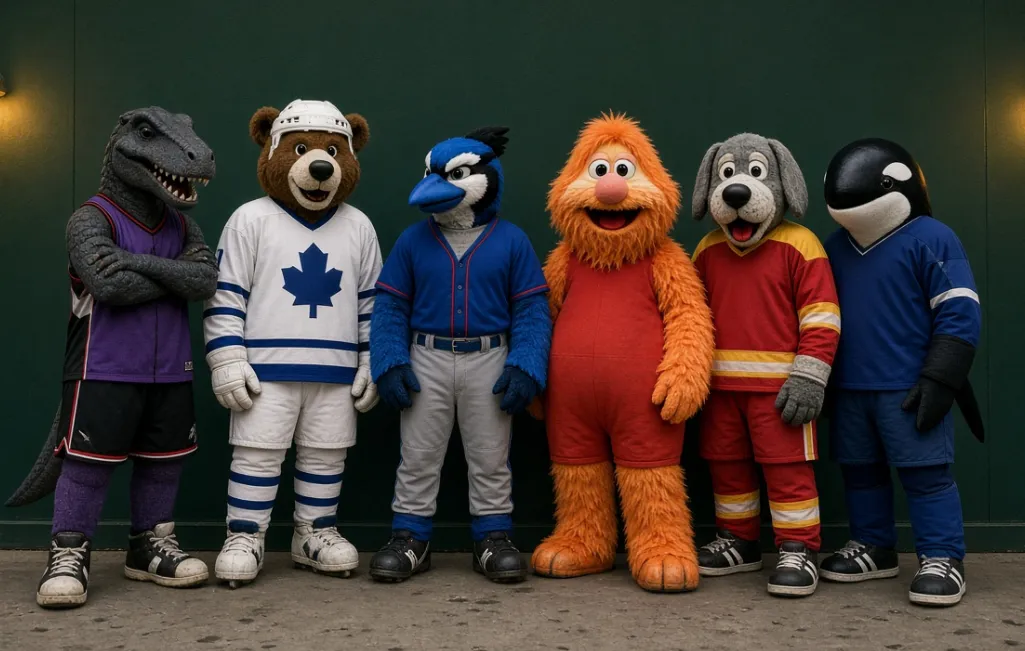
The mascots above are very different, but the strongest share several qualities.
A clear personality
A mascot should behave consistently enough that fans understand the character. Gritty feels chaotic. The Phanatic feels mischievous. A strong personality makes a costume feel like a recurring character.
A connection to team or city
Wally works because of the Green Monster. Orbit works because of Houston’s space identity. Sourdough Sam helps explain the 49ers name. The closer the connection, the harder the character is for another team to imitate.
Strong physical design
A mascot has to work from the upper deck, on television and in a phone-sized social clip. Large shapes, distinctive colors and expressive features help.
Entertainment range
The best mascots can perform at games, visit schools, appear with sponsors, interact with children and produce digital content without feeling like a different character every time.
Longevity
Mascots can become a bridge between generations of fans. A character that survives roster changes and losing seasons can become one of the most stable pieces of a franchise identity.
Why mascots matter to sports business
Mascots are valuable because they create an asset that is not dependent on player performance. A star can be traded. A coach can leave. A mascot can remain part of the brand for decades.
They are also flexible sponsorship inventory. A mascot can appear at a partner event, star in branded social content or participate in an in-game activation without changing the core competitive product.
For community relations, the value is even clearer. A mascot can enter a school or hospital room in a way that creates instant recognition and lowers the barrier between a professional franchise and a young fan.
Why the best mascots last
A strong mascot is unusually durable sports intellectual property. Players retire, coaches change and winning cycles come and go. A character can stay recognizable for decades while adapting to new generations of fans, new sponsors and new media formats.
That durability is also why the most successful mascots are more than costumes. They have a defined personality, performance rules, visual consistency and a role inside community, game-presentation and partnership strategy. The Phillie Phanatic and Youppi! are obvious examples of longevity; newer characters such as Gritty show how quickly a distinctive idea can become part of a city’s sports identity.
The order here is subjective by design. The business lesson is not which mascot wins. It is how a team turns a character into an asset fans recognize away from the scoreboard.
The people learning about sport careers here could be your next applicants.
Turn your next opening into a professional Sports Hired listing and give candidates a clear path from career research to your opportunity.
Have experience with this topic?
Help make this SPMA resource better with a first-hand perspective, practical addition, or question. Use your SPMA account or contribute as a guest.


